
Solutions
Power Factor Correction Panels

Measurement-Based Reactive Power and Power-Factor-Correction Panels
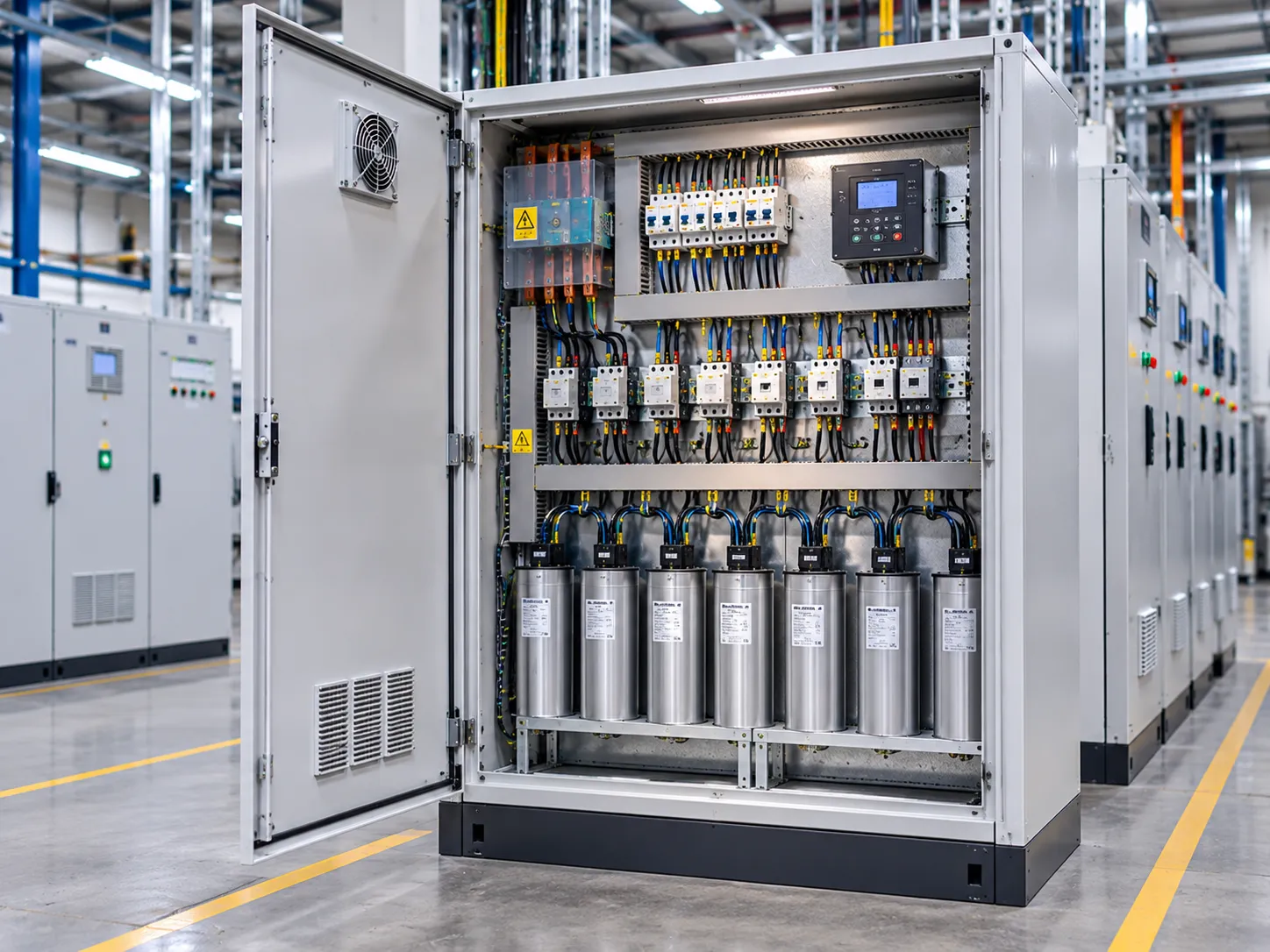
Bross Otomasyon begins power-factor-correction panel design by reviewing the facility's load profile and reactive power needs. Existing measurement and billing data, load variability, and site equipment conditions are assessed to define the technical requirements for the stage configuration.
Capacitor and reactor selection, switching devices, the control relay, panel layout, and ventilation are considered together. The need for harmonic measurements or a filtered solution is assessed using measurement results and connected equipment characteristics; components are not added without evidence that they are needed.
The project specification defines how measurements and stage behavior are verified during commissioning, the scope of testing, and the handover records. The goal is a documented power-factor-correction solution suited to the facility's maintenance and monitoring needs.
Power-Factor-Correction Panel Scope
- Reactive-power analysis
- Step-controlled capacitor banks
- Harmonic-filter selection
- Panel layout and ventilation
- Power-quality measurement
- Commissioning and step adjustment
Measurement-based power factor correction
The power factor correction project is prepared after measuring the facility's actual load profile. Reactive-power needs, harmonic level and load variation determine the step arrangement.
Implementation Scope
- Measure reactive power and load profile
- Harmonic analysis
- Select step count and ratings
- Assess filtered/unfiltered solutions
- Power-quality report

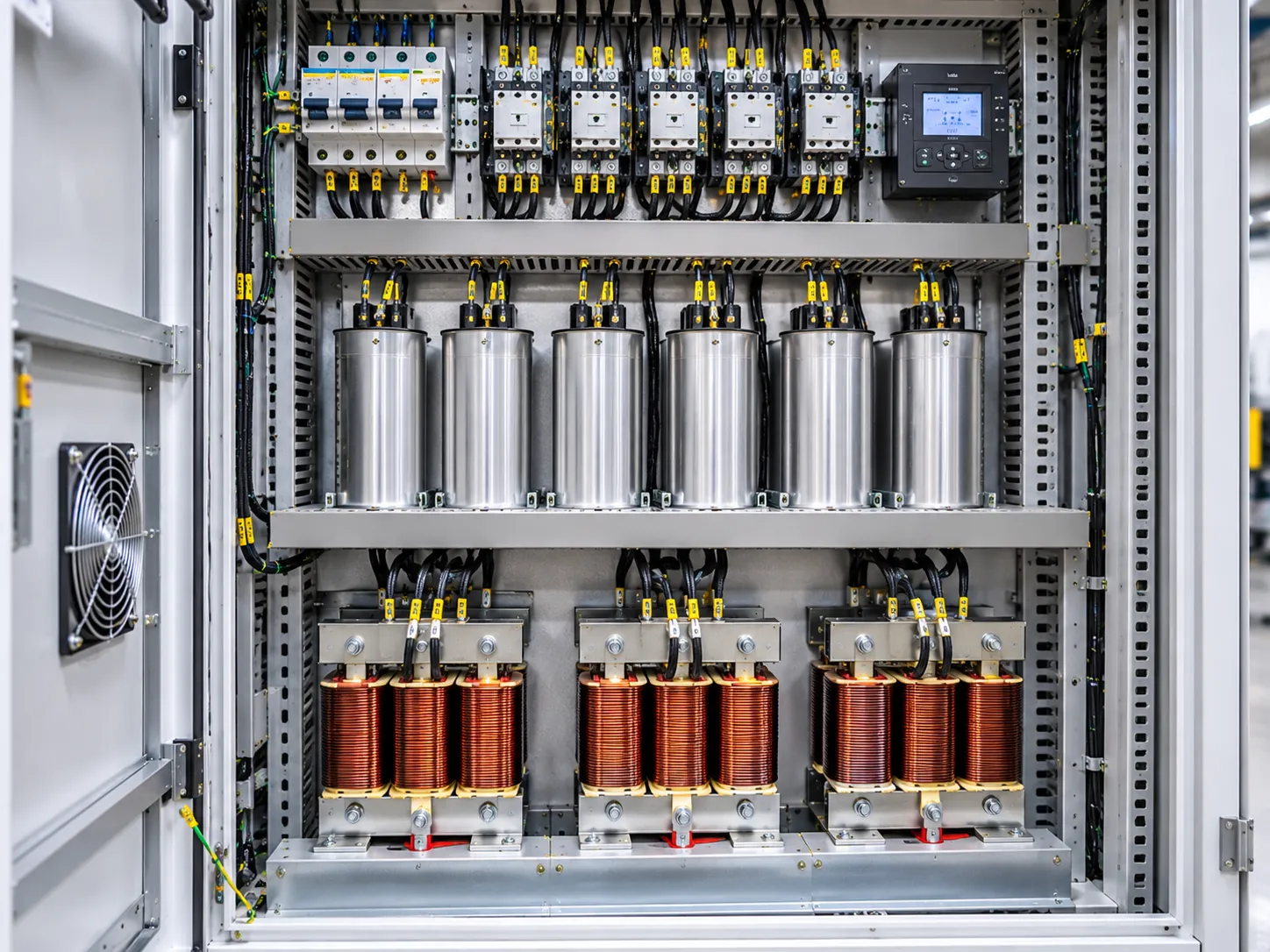
Correct layout and cooling
Capacitor banks, reactors and switching devices are positioned with regard to heat load and maintenance access. Steps are adjusted on site during commissioning.
Implementation Scope
- Capacitor and reactor selection
- Panel layout and ventilation
- Switching devices
- Commissioning and step adjustment
- Power-quality verification measurement

The solution follows measurement results
At facilities with nonlinear loads, harmonic measurements and load profiles are assessed. The need for reactor-equipped steps or filters is considered alongside measurement results and equipment compatibility.
Implementation Scope
- Harmonic and power-quality measurement
- Assess load profile and reactive power
- Review filtered-solution requirements
- Capacitor and reactor compatibility
Suitable step management for variable loads
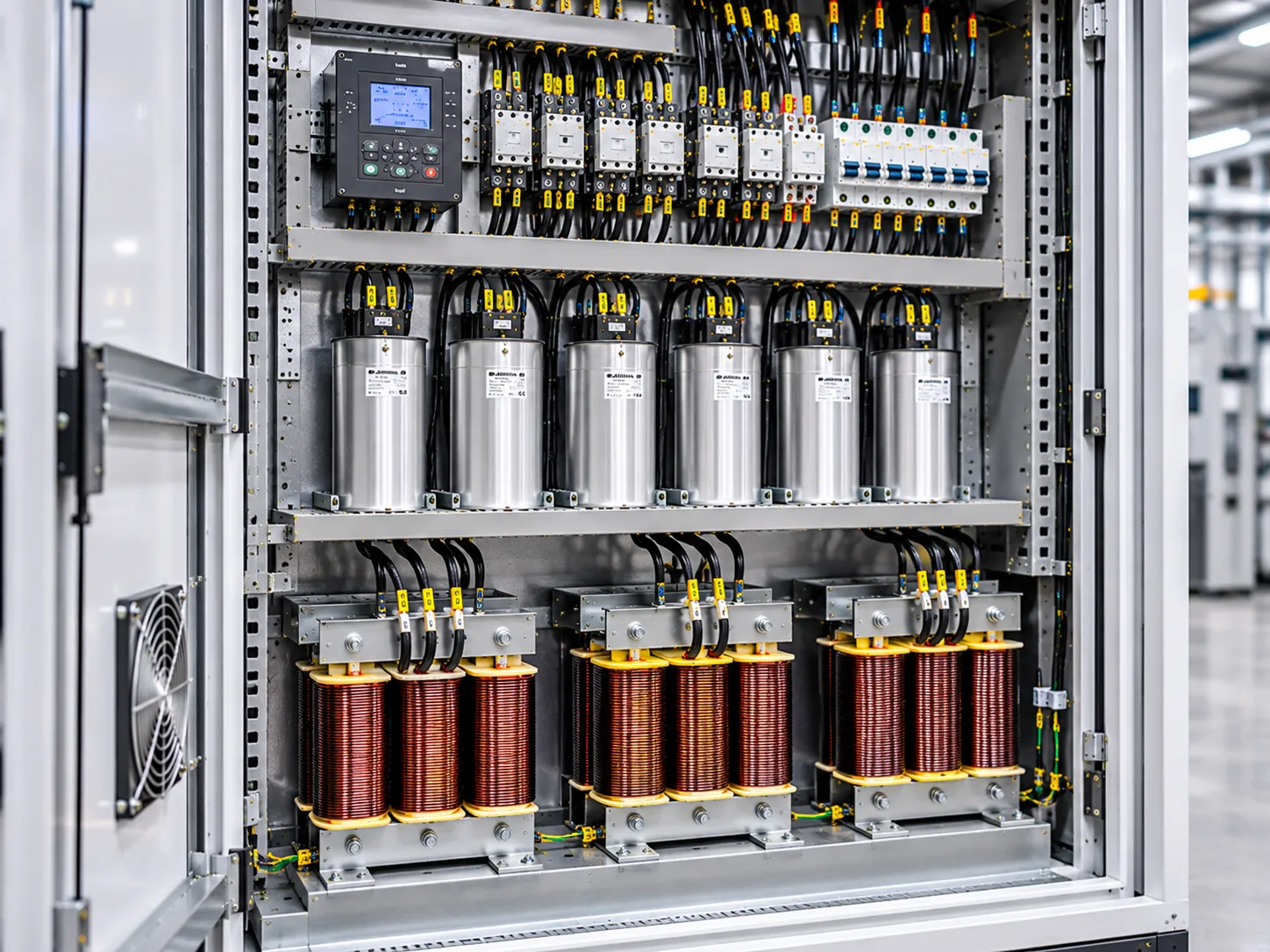
Step count, switching devices and control relay are assessed against facility load variations. Measurement and alarm points can be planned for connection to higher-level monitoring if requested.
Implementation Scope
- Step ratings and switching sequence
- Control relay and measurement connections
- Overtemperature and fault alarms
- SCADA/energy-monitoring interfaces
Inspection records for safe operation
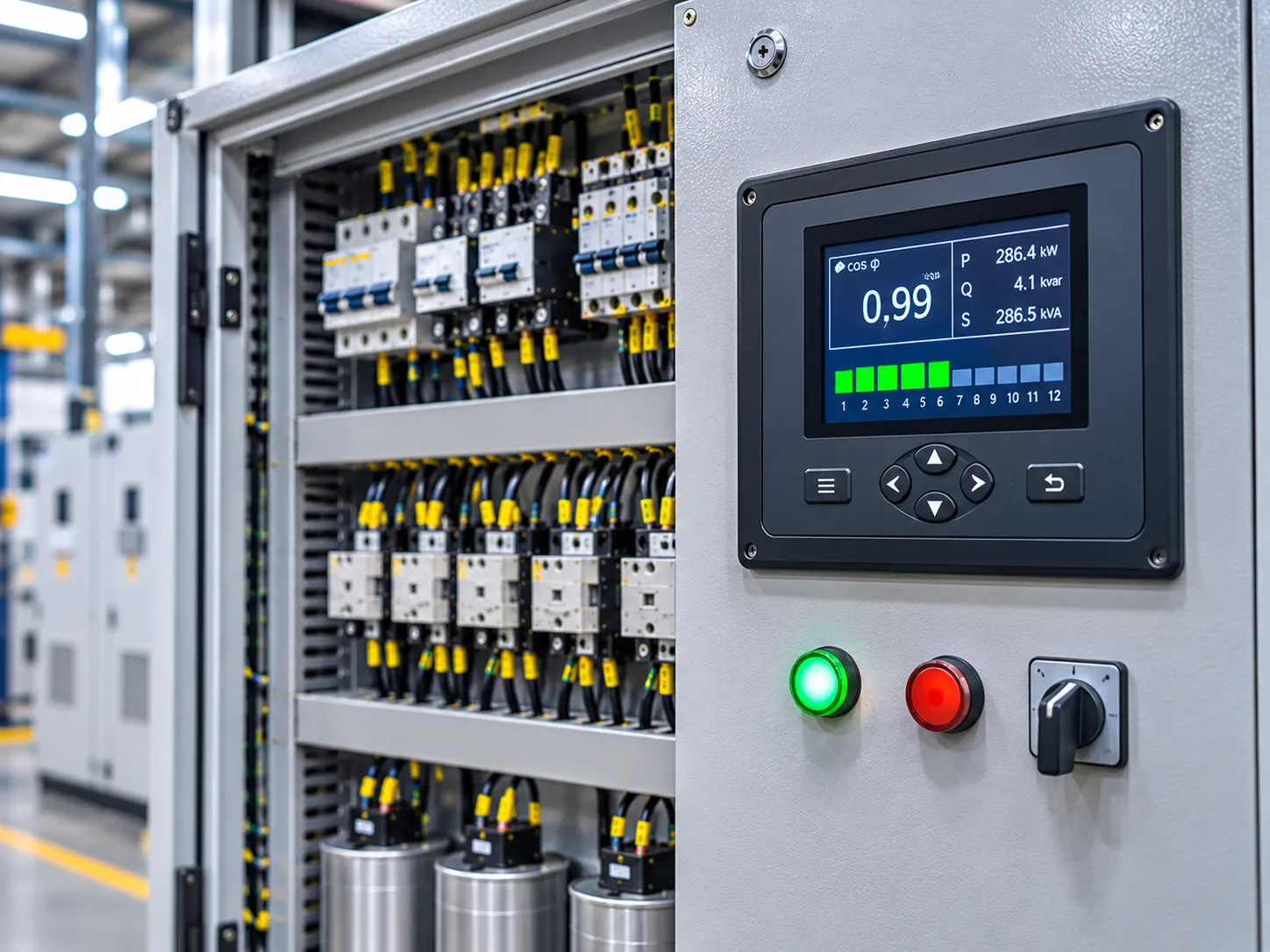
During commissioning, the measurement and step behaviour of the power factor correction panel are checked against the project acceptance plan. Maintenance access and periodic inspection notes can be included in the handover documents.
Implementation Scope
- Step and measurement checks
- Capacitor and reactor connections
- Heat and ventilation assessment
- Test and maintenance documentation

Power-Factor-Correction Panels Frequently Asked Questions
Is a power factor correction panel needed at every facility?
It is needed at facilities where reactive consumption exceeds the penalty threshold. The need is determined through measurement and bill analysis.
When is filtered power factor correction needed?
At facilities with high harmonic distortion, reactor-equipped (filtered) power factor correction is recommended to protect capacitors. The decision is based on harmonic measurement results.
How long is the payback period?
Depending on reactive penalties and improvement in the consumption profile, the payback period generally ranges from a few months to two years; an exact calculation is made after measurement.
How is the need for power factor correction determined?
The facility's reactive-power and load profiles, bills and, if needed, site measurements are reviewed. Steps and equipment are selected based on the resulting data and operating conditions.
Why is harmonic measurement important?
Harmonic levels can affect capacitor and reactor selection, heating risk and the power-quality solution. Filter requirements are assessed using measurement results and equipment data.
What information is needed before requesting a power factor correction panel quote?
An existing panel diagram, bills and reactive-consumption information, load profile, any harmonic measurement report and site conditions can be shared for the preliminary review.